







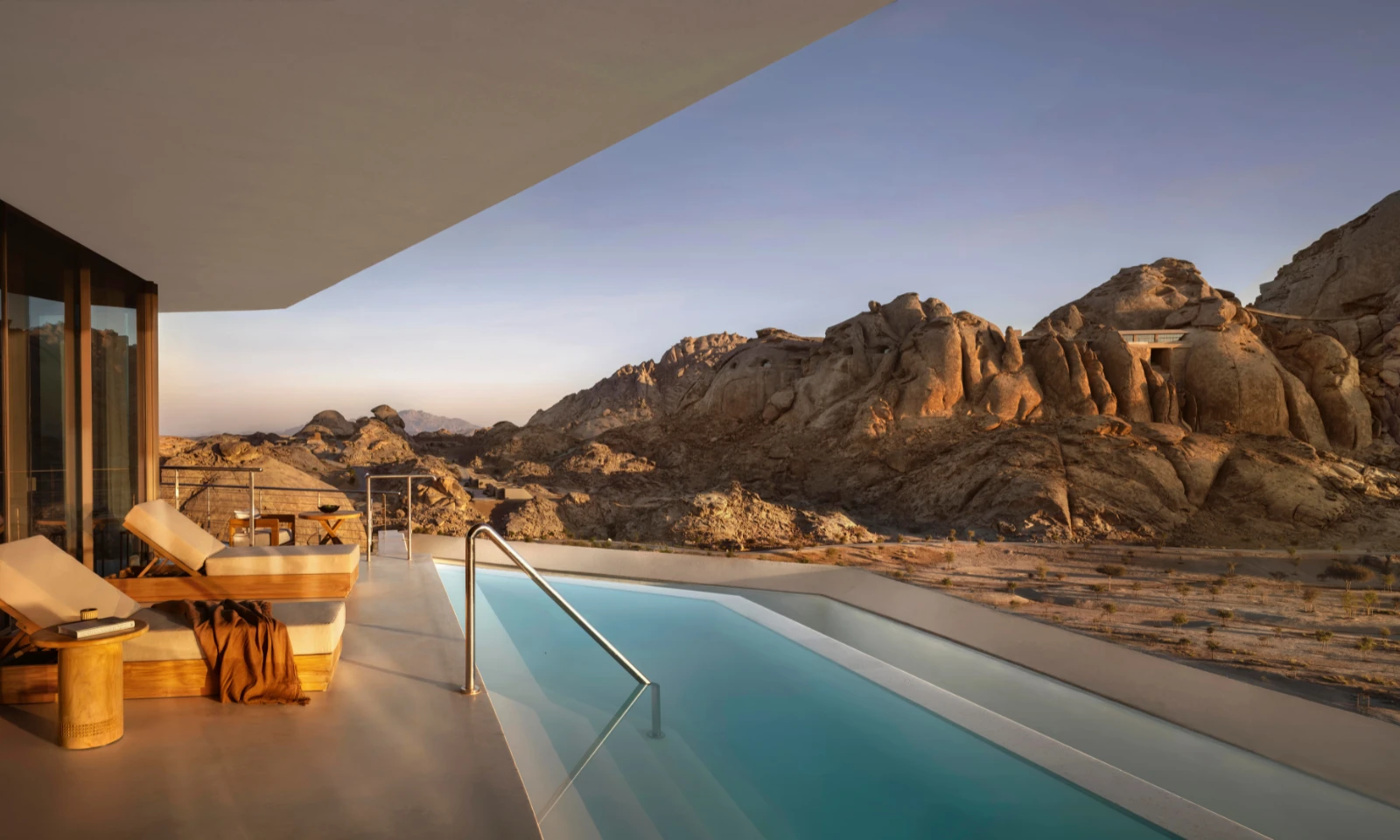
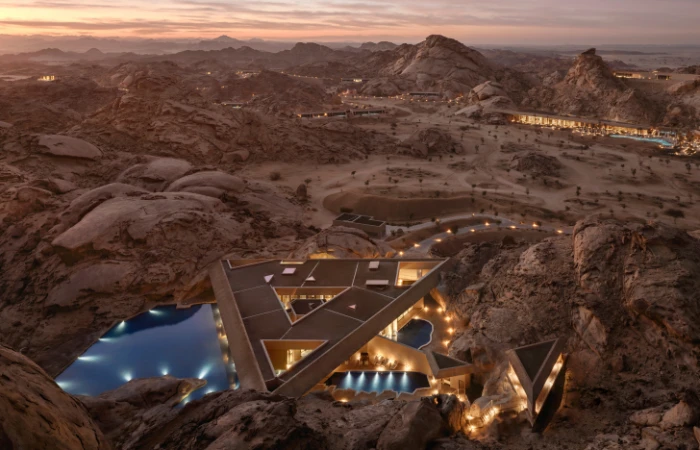
Set within the ancient Hejaz Mountains of Saudi Arabia, Desert Rock is a luxury resort shaped as much by geology as by architecture. Conceived and designed by Oppenheim Architecture in partnership with developer Red Sea Global, the 30,000-square-metre destination is embedded across a concealed valley and mountainside, with villas, suites and shared spaces revealed gradually through the landscape.
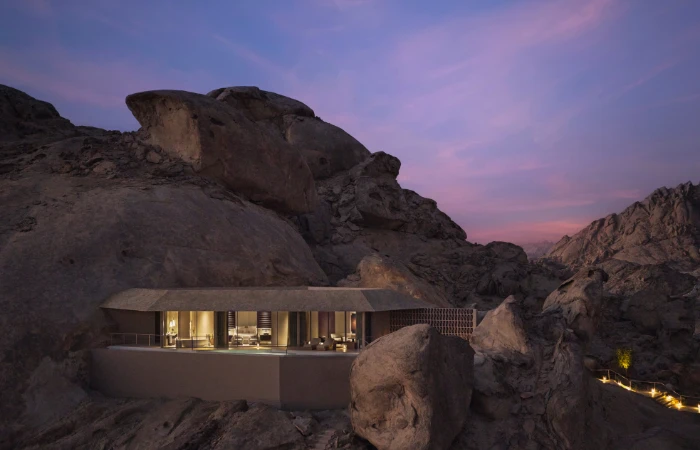
For Oppenheim Architecture, the project marks a significant moment in more than two decades of exploring the relationship between architecture, environment and human experience. Founded in 1999 by Chad Oppenheim, the global practice works across six continents from studios in Miami, Basel and Tirana, spanning hospitality, commercial, retail, residential and mixed-use projects. Its work is guided by the philosophy that design follows life and form follows feeling, with architecture shaped in response to place, culture, climate and the natural environment.
Desert Rock brings that thinking into sharp focus. The project continues the firm’s approach to creating architecture that responds to its cultural and geographic context while offering a contemporary interpretation of luxury. Its philosophy of designing with the land, not on it, is expressed here through architecture that follows the geology and contours of the mountains, blurs the boundaries between indoors and outdoors, and strengthens the connection between people and place.
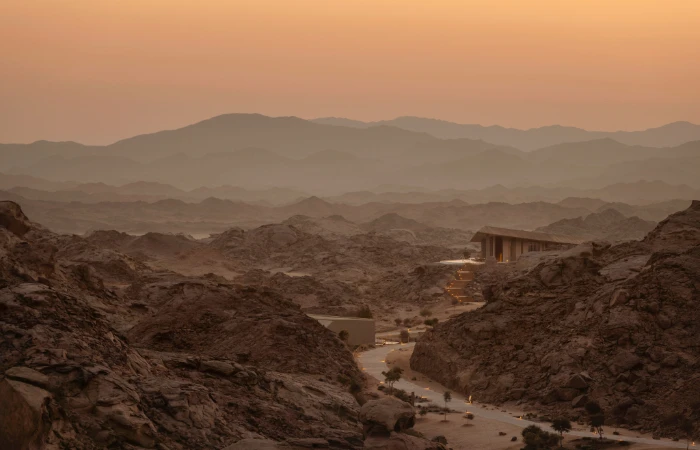
Rather than arriving as a dominant object within the landscape, the resort is largely concealed, unfolding through a sequence of arrival, discovery and immersion. The mountains, desert, light and vegetation remain central to the experience, while the architecture works in close dialogue with them.
Now recognised with both LEED Platinum and DarkSky certification, Desert Rock brings together environmental performance, materiality, landscape and hospitality in a project defined by restraint and a deep understanding of place.
The following five themes explore how Oppenheim Architecture has translated that philosophy into an experience of luxury rooted in its extraordinary setting.
1. LEED Platinum Certification
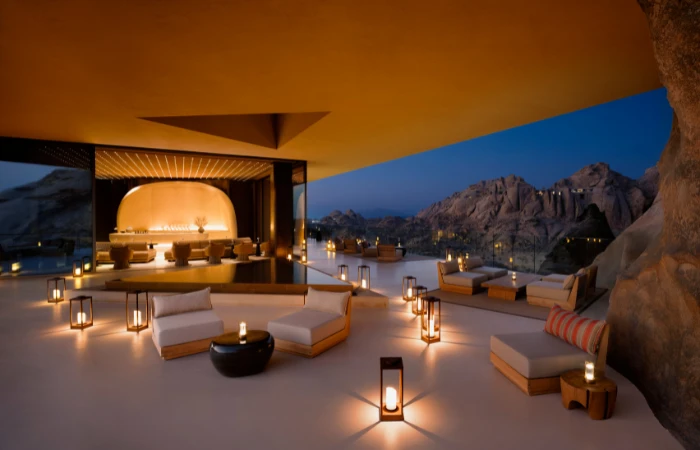
Sustainability is fundamental to the project’s design and development. Desert Rock is one of only a select number of luxury resorts worldwide to achieve LEED Platinum certification, reflecting the integration of environmental strategies across its architecture, landscape, infrastructure and operations.
During construction, excavated materials were repurposed within the project’s infrastructure, reducing waste and limiting the need for additional imported materials. Passive cooling strategies and highly efficient building systems were incorporated to reduce energy consumption in the region’s demanding desert climate.
The design also responds to the site’s natural conditions through orientation, shading, material selection and the careful placement of openings. The landscape strategy uses native and climate-appropriate plant species to strengthen the wadi’s natural character, reduce resource demands and support a resilient environment.
Together, these strategies demonstrate how luxury hospitality can be developed in an environmentally sensitive setting without compromising the quality or exclusivity of the guest experience.
2. Redefining Luxury Through Landscape
Desert Rock’s accommodation ranges from villas located on the valley floor to suites and villas embedded directly into the mountains. Each is oriented to take advantage of natural light, expansive views, privacy and the distinctive qualities of the surrounding terrain.
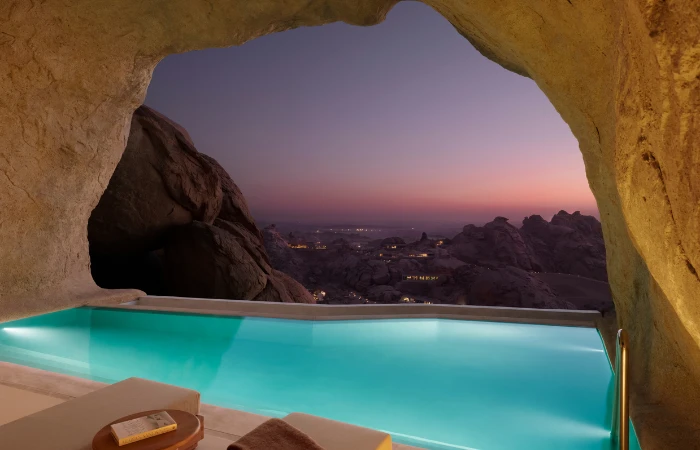
The Wadi Villas feature private pools and generous living areas, creating a close relationship with the valley and its vegetation. Elevated above the resort, the Cliff Hanging Villas offer dramatic views across the mountains and surrounding landscape, while the Mountain Cave Suites and Mountain Crevice Villas are integrated into the rock formations, creating secluded retreats with cliffside pools positioned at the edge of the Massif.
Located within a private section of the valley, the Royal Villa provides the resort’s most exclusive and secluded accommodation.
Across these different typologies, the landscape remains central to the guest experience. Rather than separating guests from their surroundings, the resort makes the environment an essential part of the stay. The mountains become the architecture, the views become part of the interior, and the changing qualities of light and climate shape the experience throughout the day.
In this sense, Desert Rock presents a model of hospitality in which luxury is defined by the quality of its relationship with nature, and by Oppenheim Architecture’s ability to let the landscape remain the most powerful presence on the site.
3. Building With the Land, Not on It
Oppenheim Architecture’s guiding philosophy is expressed most clearly in the way Desert Rock occupies the site.
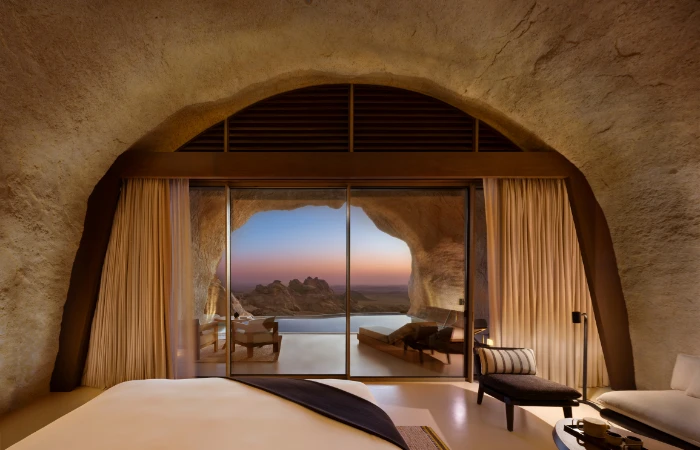
Rather than placing a resort onto the landscape, the architecture follows the geology and contours of the mountains. Upon arrival, guests enter a concealed valley where the resort is gradually revealed, while accommodation and amenities are carefully positioned throughout the valley and mountainside.
The approach creates a sense of discovery while preserving the feeling of an untouched environment. The surrounding mountains, desert, light and vegetation remain central to the character of the place.
As Chad Oppenheim, Founding Principal of Oppenheim Architecture, explains:
“Desert Rock embodies our philosophy of connecting architecture to the spirit of place. By respecting and enhancing the natural environment, we have created a sanctuary that allows guests to experience the beauty and power of the landscape in deeply personal and meaningful ways.”
4. Restraint, Sensitivity and a Deep Understanding of Place
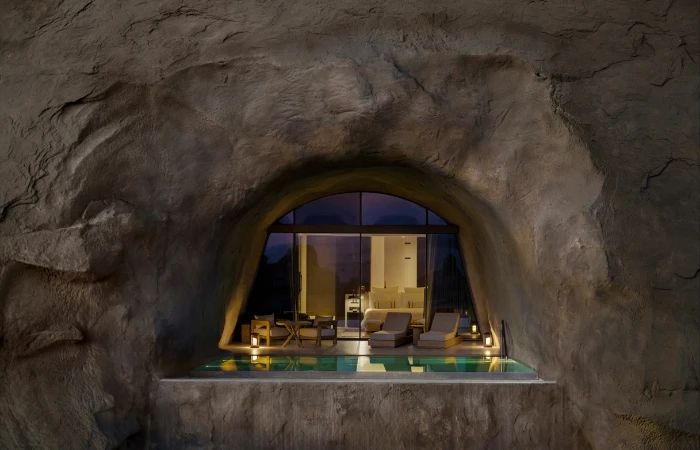
The design draws inspiration from the Nabataean civilisation, renowned for its extraordinary rock-carved architecture. Rather than replicating historic forms, Oppenheim Architecture translated the underlying relationship between architecture and geology into a contemporary language.
Stone, shadow, natural light and carefully positioned openings establish a direct dialogue between the built environment and the mountains.
The architecture is intentionally restrained, allowing the scale and character of the Hejaz Mountains to define the experience. This reflects Oppenheim Architecture’s belief that some of the most meaningful architectural experiences are created through restraint, sensitivity and a deep understanding of place.
Across its work, the practice describes its approach as one in which architecture should respond to the conditions of a place rather than impose a predetermined aesthetic upon it. At Desert Rock, that philosophy is visible in the way architecture, materiality and landscape are allowed to operate as a single composition.
5. DarkSky Certification
Desert Rock has also become one of the first resorts in the world to earn certification under the new DarkSky Approved Lodging & Resort programme, developed by DarkSky International in collaboration with Red Sea Global.
Responsible outdoor lighting forms an important part of the resort’s wider environmental approach. By minimising artificial light at night, DarkSky principles reduce energy consumption, preserve natural night skies and protect biodiversity by maintaining the natural light-dark cycle that wildlife depends on.
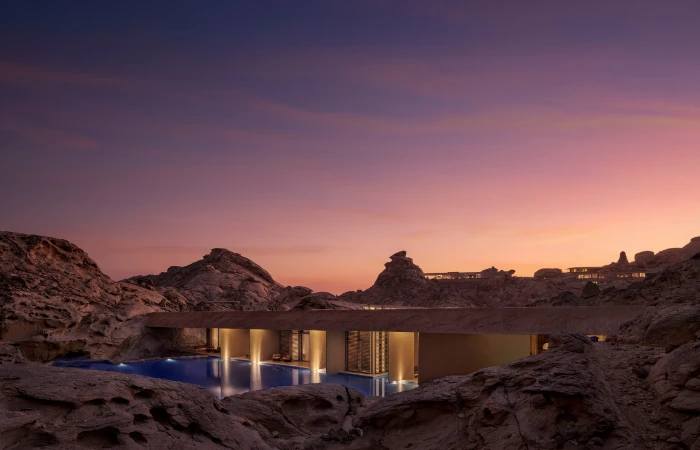
For guests, these same principles create opportunities for stargazing and a stronger connection with the surrounding landscape after dark. The certification reinforces a broader theme within Oppenheim Architecture’s work at Desert Rock: environmental performance is treated as part of the experience of place rather than as a separate technical consideration.
Photography by John Athimaritis.