








While our usual focus is on interior environments, some of the most thought-provoking ideas for commercial designers and architects can come from projects that sit beyond the boundaries of interiors.
Studio Wignall & Moore’s new 1914–1918 Memorial at Brookwood Military Cemetery in Surrey is one such project. Commissioned by the Commonwealth War Graves Commission (CWGC), it commemorates more than four hundred First World War service personnel from the UK and Ireland whose graves were never formally identified and whose contribution went unrecognised for more than a century.
Yet beyond its profound commemorative purpose, the project offers rich inspiration for those shaping experiences and environments today. Its considered use of materiality, landscape, storytelling, symbolism and sensory experience demonstrates how design can communicate complex histories without relying on overt explanation. It explores how materials can carry meaning, how movement through a space can shape emotion, how heritage can inform contemporary design and how the relationship between people, place and time can become part of an experience.
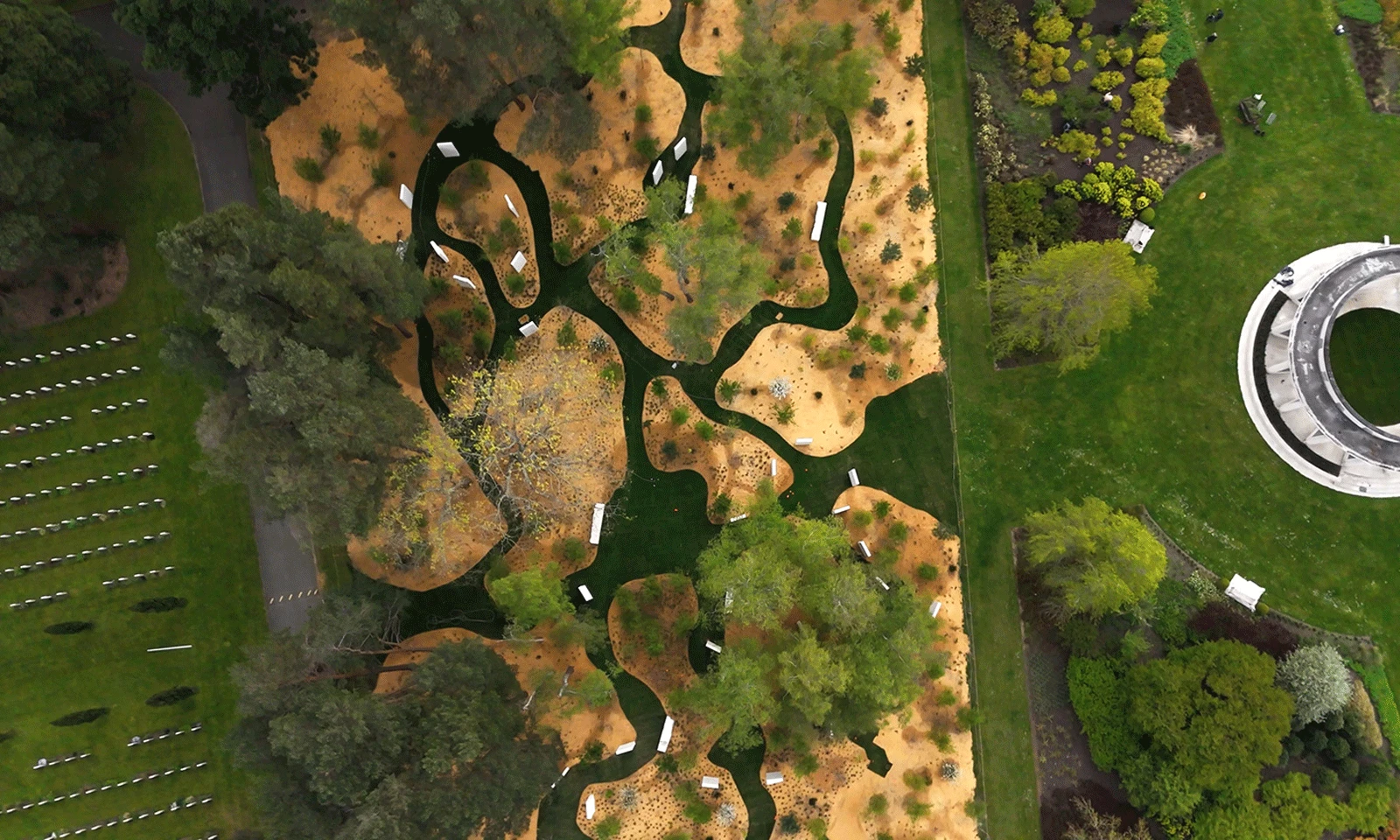
Designed as a landscape to be discovered rather than a singular monument to be viewed, the memorial brings together architecture, horticulture, astronomy and history in an unusually layered response to remembrance. Now complete and officially inaugurated by HRH The Princess Royal, President of the Commonwealth War Graves Commission, the project offers an unexpected point of reference for designers considering how places can encourage connection, contemplation and lasting emotional resonance.
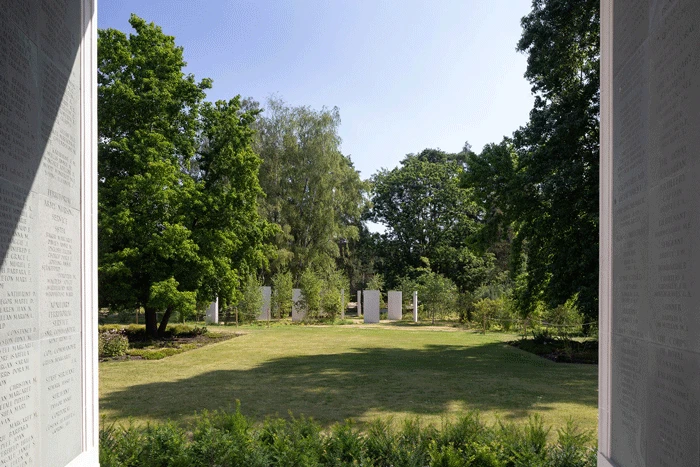
Studio Wignall & Moore create ‘A Memorial Forest’ at Brookwood Military Cemetery to honour those whose graves have never been formally identified
Sky, Stone and Landscape
Bradley Moore, Director of Studio Wignall & Moore, commented on the practice’s approach to the memorial:
“We wanted the site to feel reflective rather than monumental; somewhere visitors could pause, spend time and reconnect with individual stories of loss and commemoration.”
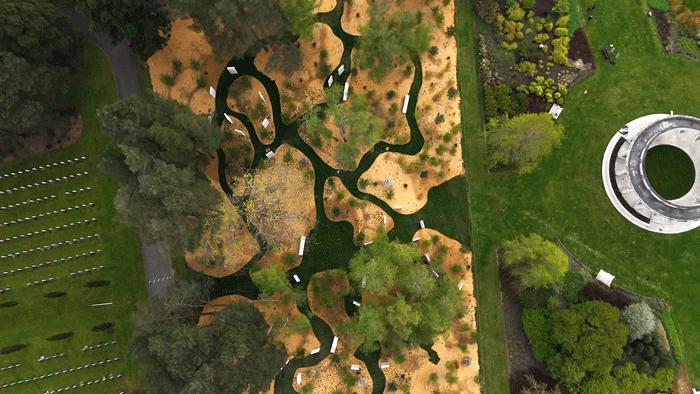
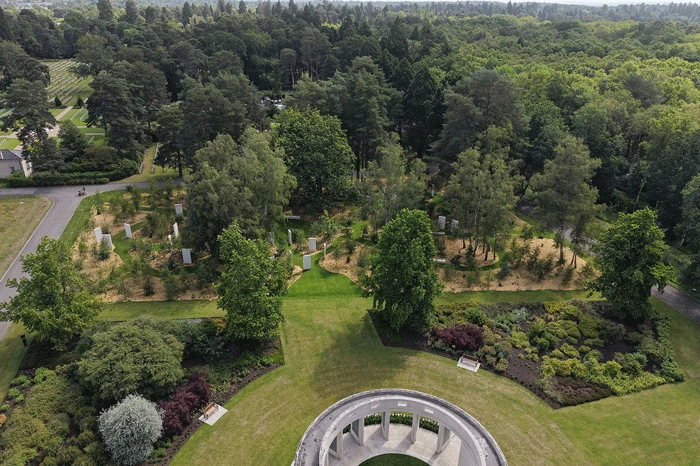
The design sought to establish a landscape that feels contemplative, enduring and deeply connected to its setting, as well as incorporating a meaningful relationship with environmental stewardship. Rather than creating a single monument therefore, Studio Wignall & Moore conceived the site as ‘a memorial forest’ of stones and planting: a landscape to be wandered through and returned to, bringing together architecture, horticulture and history in a natural environment that invites tranquillity.
James Wignall, Director of Studio Wignall & Moore explained:
“At the centre of the design is a celestial concept. Working alongside the Royal Astronomical Society, we mapped the night sky as it would have appeared above Brookwood at the moment the guns fell silent and the Armistice was signed, in the early hours of 11 November 1918. We then translated the positions of the brightest visible stars from that precise moment into the layout of the stelae on the ground, with each named for the star it represents, reinforcing the cemetery’s connection to time, memory and place.”
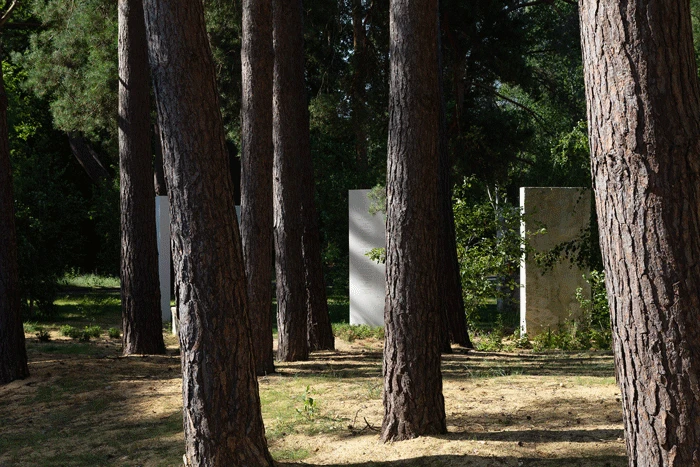
Thirty commemorative Portland stone stelae were commissioned for the installation, with one additional stone acting as a dedication. These are arranged across a woodland setting of new tree planting, wildflower meadow and heathland, developed in close collaboration with landscape designer Tom Stuart-Smith OBE. The memorial’s layout and planting create a calm, green atmospheric natural space, rich in biodiversity, where visitors can pause, reflect and connect with the history of those commemorated at Brookwood Military Cemetery – the UK’s largest Commonwealth war cemetery.
Background to the Project
Continuing research by the CWGC’s Commemorations Team and volunteer researchers from the In From The Cold Project had revealed hundreds of additional service personnel who died of wounds, illness or trauma linked to their wartime experience after returning home from military service. This memorial now gives those who died in this way a permanent place of ongoing commemoration – and has been designed with room to add a further 800 names as research continues.
Stone as an Expression of Time
The stelae designed for the memorial by Studio Wignall & Moore are carved from the traditional material for memorials – Portland stone – and sourced from the largest blocks available from the same geological beds from which the CWGC obtained its earliest memorial stone. Their dimensions are shaped by the natural limits of the Dorset quarry itself.
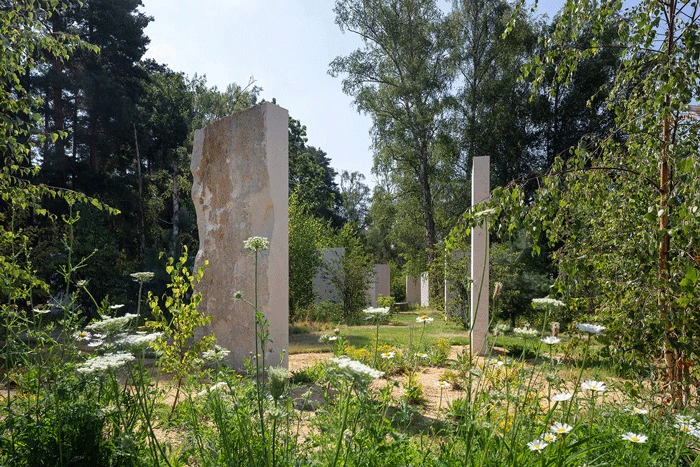
Eight of the stelae, scattered throughout the site, show their natural unrefined quarry faces, usually removed during the refinement process. Bradley Moore explained:
“The inclusion of the unrefined faces, reveals the history embedded within the stone, exposing traces of ancient riverbeds, fossilised vegetation and other formations created over millions of years. In doing so, the design treats stone not simply as a construction material, but as an expression of time, connecting individual acts of remembrance to a far broader temporal landscape.”
Despite their substantial size, the stelae are supported by an innovative foundation system that allows them to be safely installed without the use of concrete, reducing the project’s environmental impact and preserving the integrity of the landscape. Six monolithic Portland stone benches are also positioned throughout the memorial and aligned with the arc of the sun, encouraging visitors to pause, sit and spend time within the landscape, transforming the memorial from a place of passage into a place of reflection.
Long-Term Landscape Stewardship
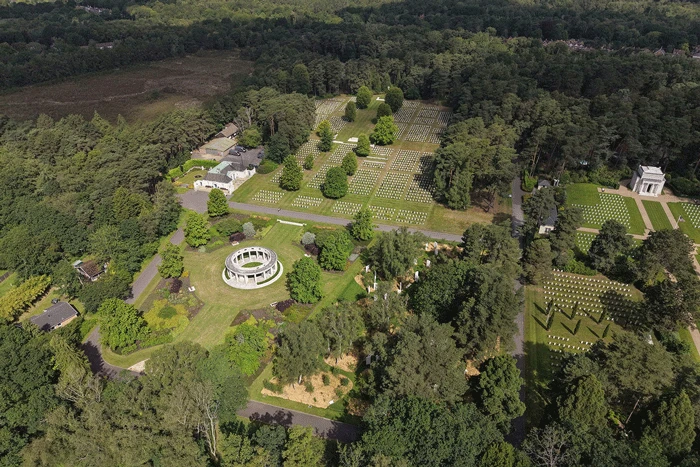
Planting introduces wildflower, pollinator-friendly and heathland species selected for their ability to thrive in the site’s low-nutrient, low-pH sandy soil without long-term irrigation, alongside more than 400 newly planted trees. The approach is deliberately one of stewardship, creating a living, evolving landscape intended to encourage climate resilience and biodiversity over decades, supporting wildlife and providing a peaceful setting for generations to come.
Designed for the Commonwealth War Graves Commission, Studio Wignall & Moore offers a new model for remembrance – one that can grow as history continues to emerge.