

As retail continues to evolve, creating memorable shopping experiences is about far more than displaying products. Today’s most successful spaces engage the senses, tell compelling brand stories and give customers a reason to step away from the screen and into a physical environment.
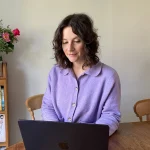
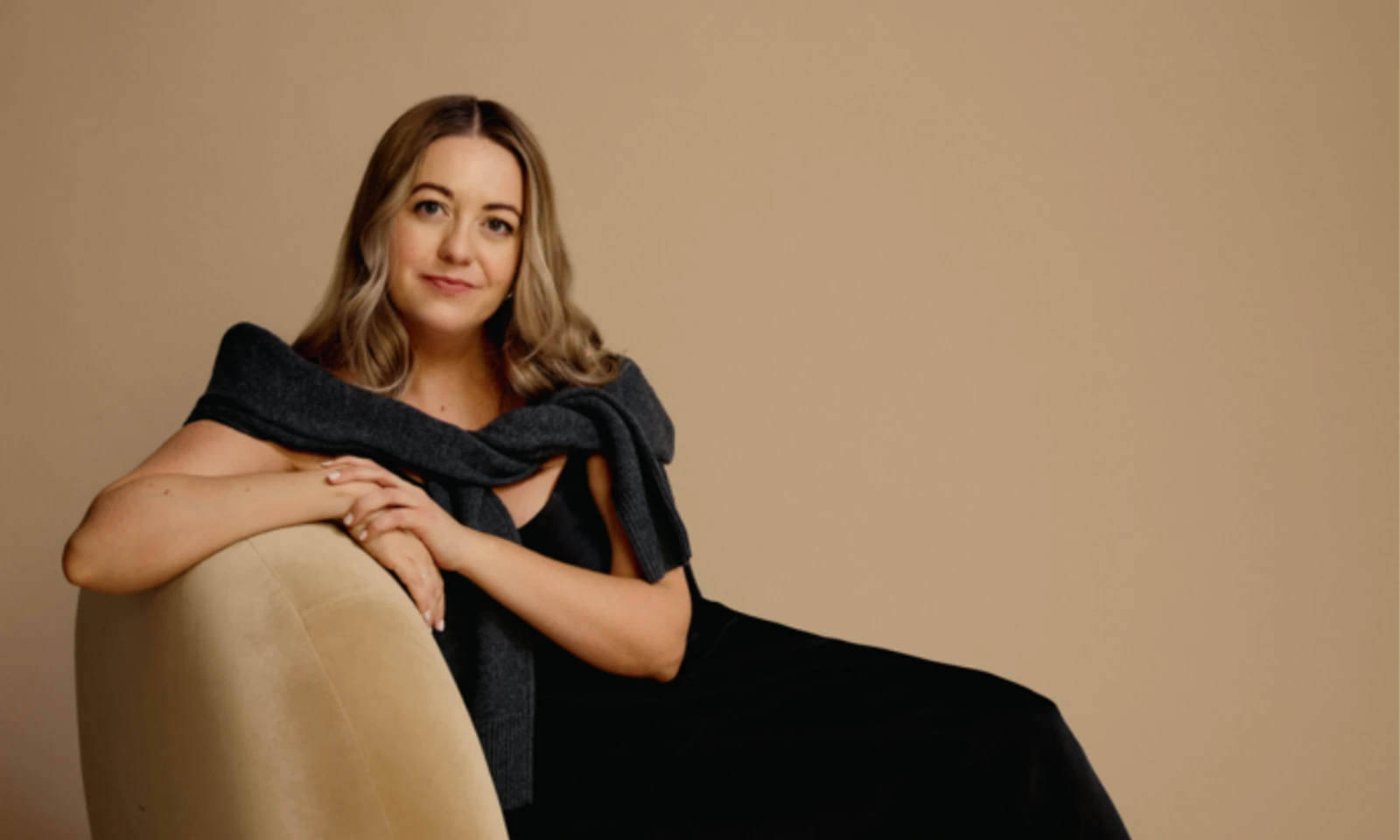
Following the completion of 4th & Reckless’ new Selfridges Manchester concession, Design Insider caught up with Franky Rousell, Founder of Jolie, to discuss the thinking behind the project. From designing an immersive boutique experience within a department store to using scent, sound, lighting and storytelling to shape customer behaviour, Franky shares how thoughtful design can transform the way people experience retail.
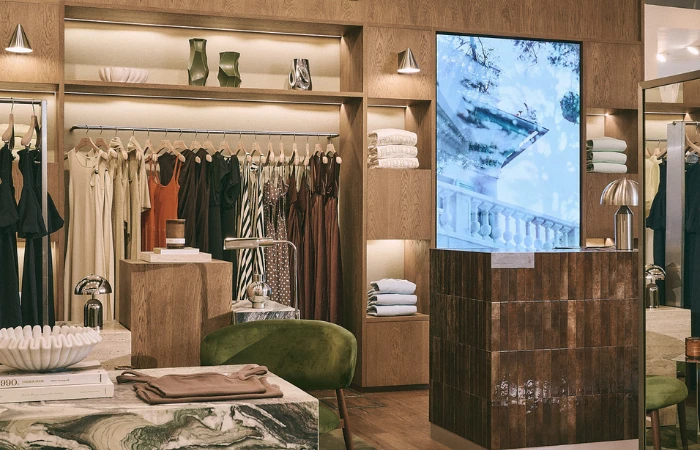
1. The brief challenged you to rethink the traditional department store concession. Before you started designing, what did you identify as the biggest limitation of that format, and how did your design seek to overcome it?
The biggest challenge with a department store concession is that you’re surrounded by so many other brands and experiences, so you really have to create something that makes people want to stop and step inside.
For 4th & Reckless, there was another layer to it because this was their first real physical presence after building such a strong e-commerce brand. We wanted to give them a space that felt like it belonged to them, and that allowed people to understand the brand in a much more tangible way.
We didn’t want it to just be about the clothes. We looked at everything from the lighting and materials to the furniture and fragrance, and thought about how those details could come together to create a feeling that was recognisably 4th & Reckless.
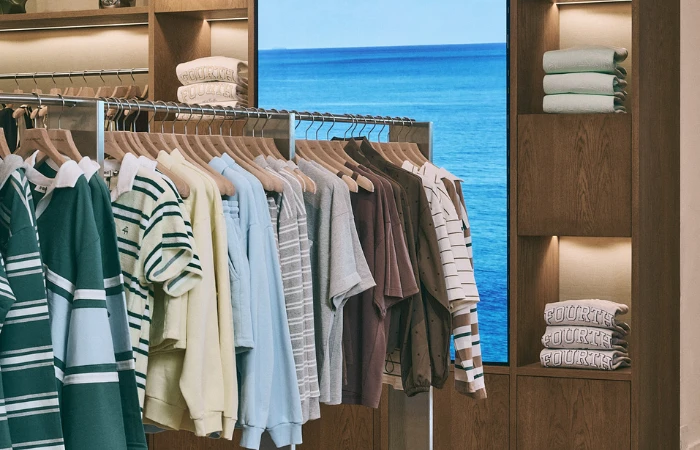
2. You describe the project as an immersive boutique experience rather than a conventional concession. Which design decisions were most important in making customers feel they had stepped into a distinct brand world rather than simply another retail space?
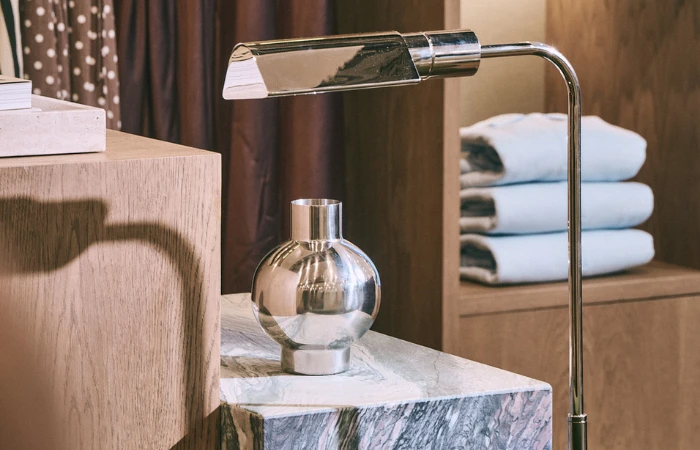
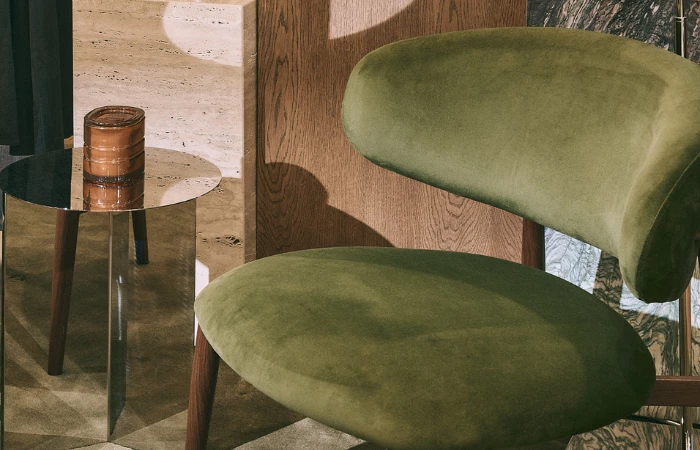
We wanted it to feel clean and contemporary, but not cold. There are harder materials, like the marble, alongside much softer, tactile pieces such as the armchairs, which give the space a more relaxed, residential feel.
We also introduced a lot of bespoke elements and took inspiration from the feeling you get when you walk into a really great boutique hotel. Somewhere that feels considered, but not overly designed. You want to feel comfortable there and want to stay for a while.
Lighting and fragrance were really important too. They’re subtle, but they completely change the atmosphere and help the space feel like its own little world within the department store.
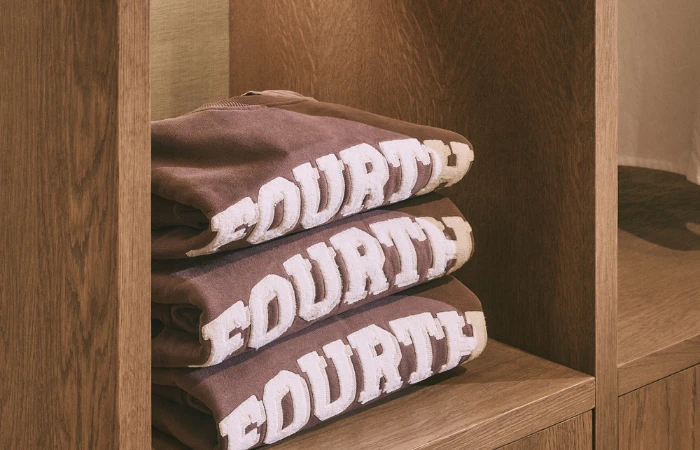
3. As online shopping continues to grow, what do you think physical retail now needs to offer that digital channels simply can’t? How has that thinking influenced your approach to retail design?
We spend so much of our time online now, so there’s something really lovely about being able to step into a physical space and actually see, touch and experience things for yourself.
I think that’s why retail is becoming much more about the experience. It needs to give you a reason to leave the house. It should feel like somewhere you want to spend time, rather than somewhere you simply go in, buy something and leave.
For us, we wanted to create more of the feeling of checking into a hotel than walking into a traditional shop. Somewhere that feels welcoming, comfortable and a little bit unexpected.
Physical spaces also have the opportunity to give you a break from the noise and pace of everyday life, so creating somewhere that feels calm and restorative was really important to us.
4. Your work often explores design beyond the visual, incorporating scent, sound, texture and materiality. Why do you think these sensory elements have become increasingly important in shaping how people experience retail environments?
We know that our experience of a space is about so much more than what we see. Scent, sound, texture and materiality all influence how we feel within an environment, and ultimately how we remember it.
Scenting is a particularly powerful way of tapping into our olfactory system, which is closely connected to memory and emotion. Multi-sensory environments are significantly more memorable than visually led spaces alone, so by combining these different sensory cues, we can create stronger associations with a brand that last well beyond the initial physical experience.
That can be particularly valuable in retail. Someone might try something on in-store and want some time to think about it before making a final purchase online, for example. If the brand and the experience have stayed in their memory, they are much more likely to return and engage with it again.
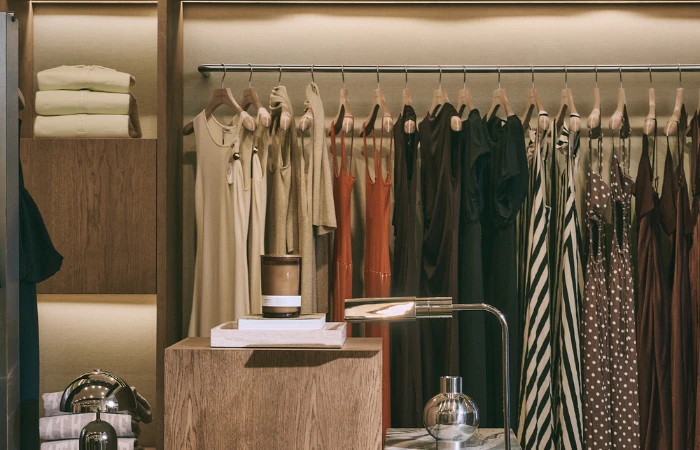
5. The project introduces subtle interventions to soften sound and diffuse fragrance within a busy department store. How do these sensory decisions influence the way customers move through, engage with and ultimately remember a space?
It’s important for these interventions to feel natural. It isn’t about overwhelming people with sensory stimulation, but understanding how subtle changes to an environment can influence how someone feels, moves through a space and ultimately engages with it.
We prefer to work in a much more understated way. Rather than making people conscious of the sensory experience, the aim is to create an environment that simply feels good, without them necessarily knowing why. Small interventions can encourage people to slow down, helping to reduce stress and decision fatigue. When people feel calmer, they are able to make purchasing decisions with greater clarity, rather than feeling rushed or overwhelmed.
They are also more likely to linger and explore the space. When an environment feels calm, comfortable and inviting, people have more opportunity to touch and interact with the garments. Materials, furniture, scent and the overall atmosphere can all contribute to that sense of touch and emotional connection, creating an experience that feels more engaging and, ultimately, more memorable.
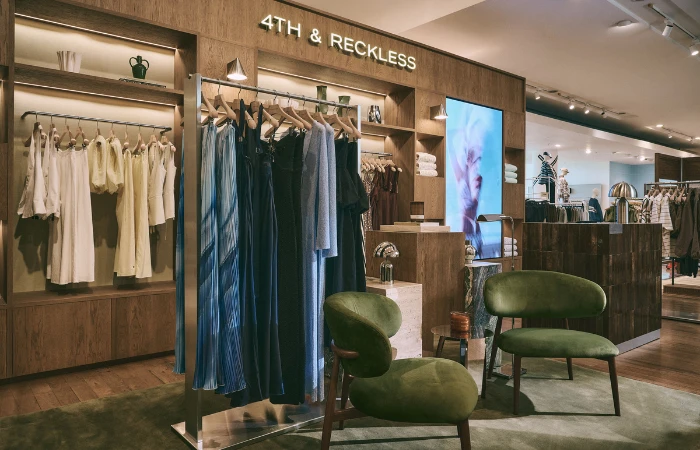
6. The layout follows the rhythm of a day in the life of the 4th & Reckless customer, rather than a traditional merchandising strategy. How did that narrative approach help answer the original brief, and what advantages did it offer over a more conventional retail layout?
We really wanted the space to speak to the 4th & Reckless customer. She is someone who loves to travel, is curious and enjoys exploring the world, and we wanted to imagine how she might actually wear the brand throughout that journey.
That led us to the idea of the space feeling a little like the lobby of a boutique hotel. You discover swimwear, then loungewear and leisurewear that you might wear on a flight, before moving through to daytime pieces and evening dresses.
It gave us a much more natural way of thinking about the customer journey. Rather than simply organising the clothes by product category, we were able to create a sense of destination and make the customer feel like they had already started their trip. That feeling of escapism was really important to the overall concept.
7. There’s a lot of discussion about the future of the high street, but perhaps the real question is the future of the shopping experience. What do you think retailers still misunderstand about designing spaces that people genuinely want to spend time in?
The real question is the future of the shopper, and therefore the future of the shopping experience. I think retailers sometimes underestimate just how much the environment can influence how people feel. Lighting, sound, fragrance and the materials around us can all have a real impact on a shoppers experience of a brand, and these things need to be considered as part of the overall design rather than as an afterthought.
It is also important to think beyond the customer. Retail staff can spend long hours in these environments, so if we are designing spaces to make customers feel happy, comfortable and excited, the people working there should be experiencing those same benefits.
Ultimately, if you create an environment where both the customer and the staff feel good, that comes through in the experience. Staff are much more likely to feel passionate about what they are representing if they are working somewhere that makes them feel positive and proud.
8. Looking back at the original brief, what moment within the finished concession best demonstrates that you’ve achieved what you set out to do—and why?
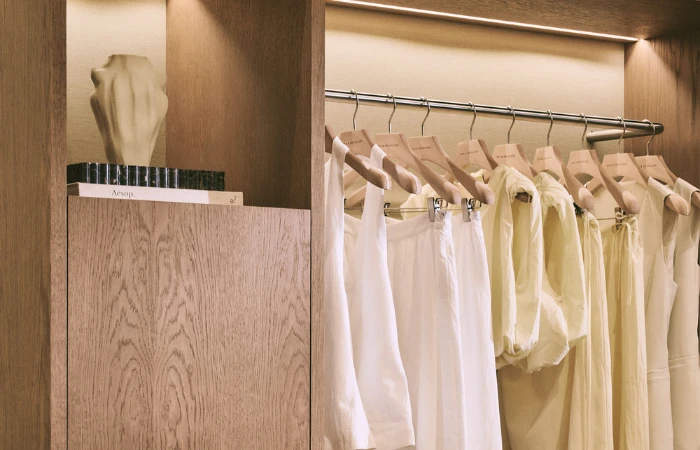
I think it is actually the combination of lots of small moments. The downward lighting has a really residential quality to it, which creates a sense of intimacy and warmth.
I also love the timber shelving, which is dressed with beautiful objects that build the overall narrative. Then you have the soft armchairs, which encourage people to sit down, linger and spend more time there.
Those small details are what make a retail space feel less transactional. It has also been really exciting to see that reflected both in how people are engaging with the concession physically and in how it has been shared across social media.
Our thanks to Franky Rousell, Founder of Jolie, for taking the time to share the thinking behind the project and the design decisions that shaped 4th & Reckless’ new Selfridges Manchester concession.